
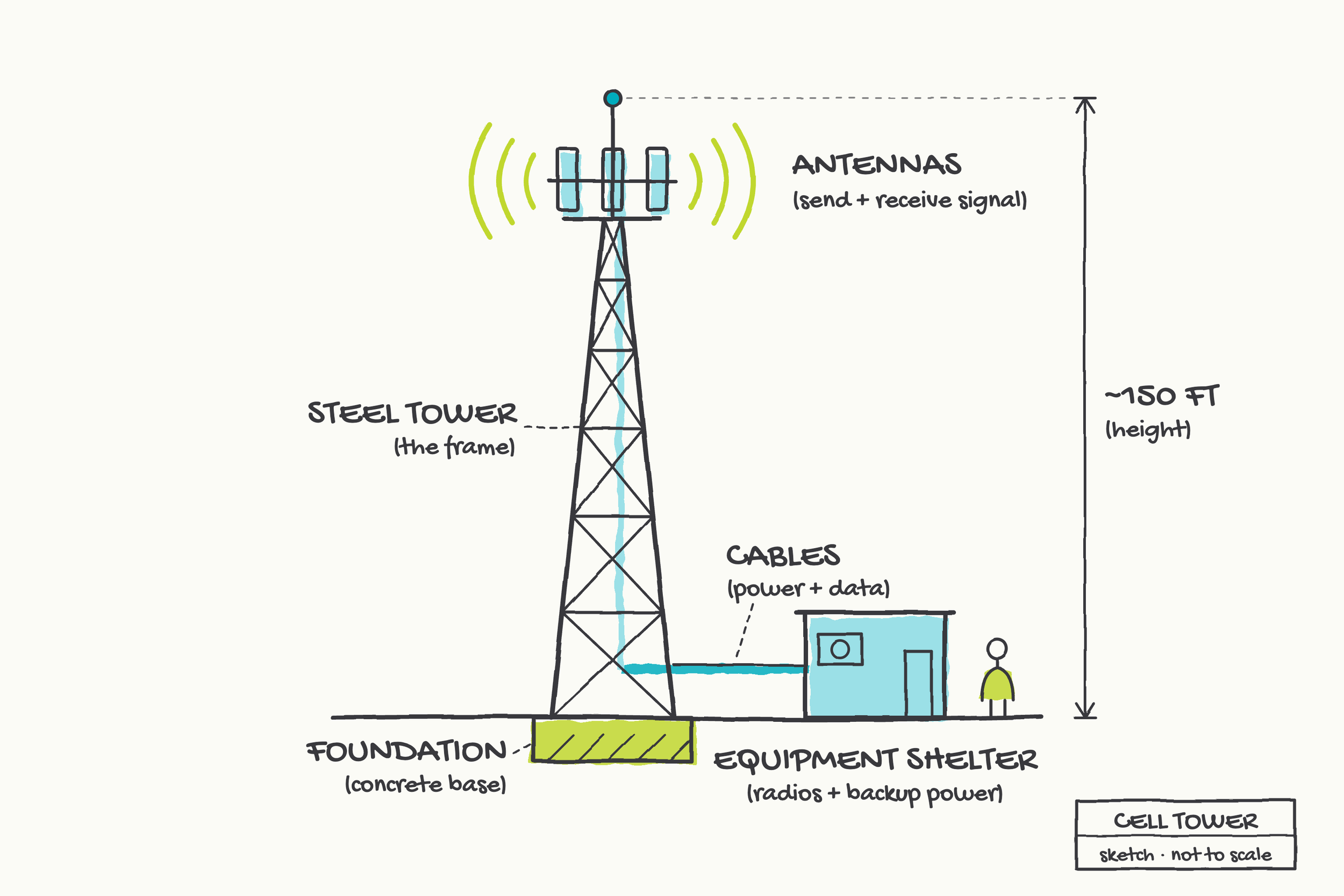
You can't ship software like you ship a cell phone tower
Digital product development is crucial for the industrial manufacturing sector. Digital products are fundamentally different than physical ones. This article explains why that is and how to adapt your physical manufacturing product knowledge to digital products.
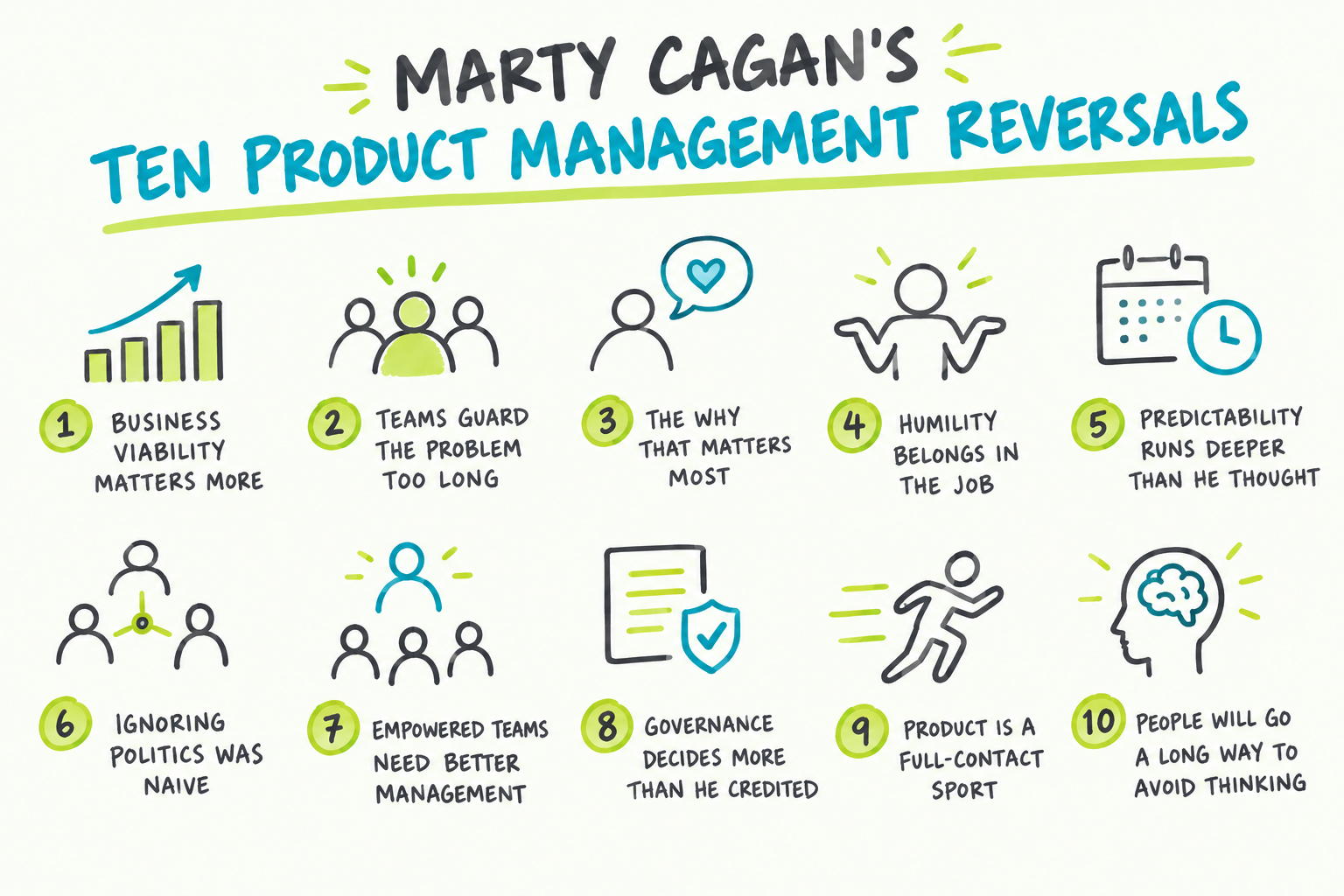
Marty Cagan's ten product management reversals
As AI continues to change the world on a weekly basis, it’s nice to see industry thought leaders revising their original POVs on what makes for successful product management. Here is Marty Cagan’s recent list of 10 reversals and how each one is a learning topic at Sense & Respond Learning.
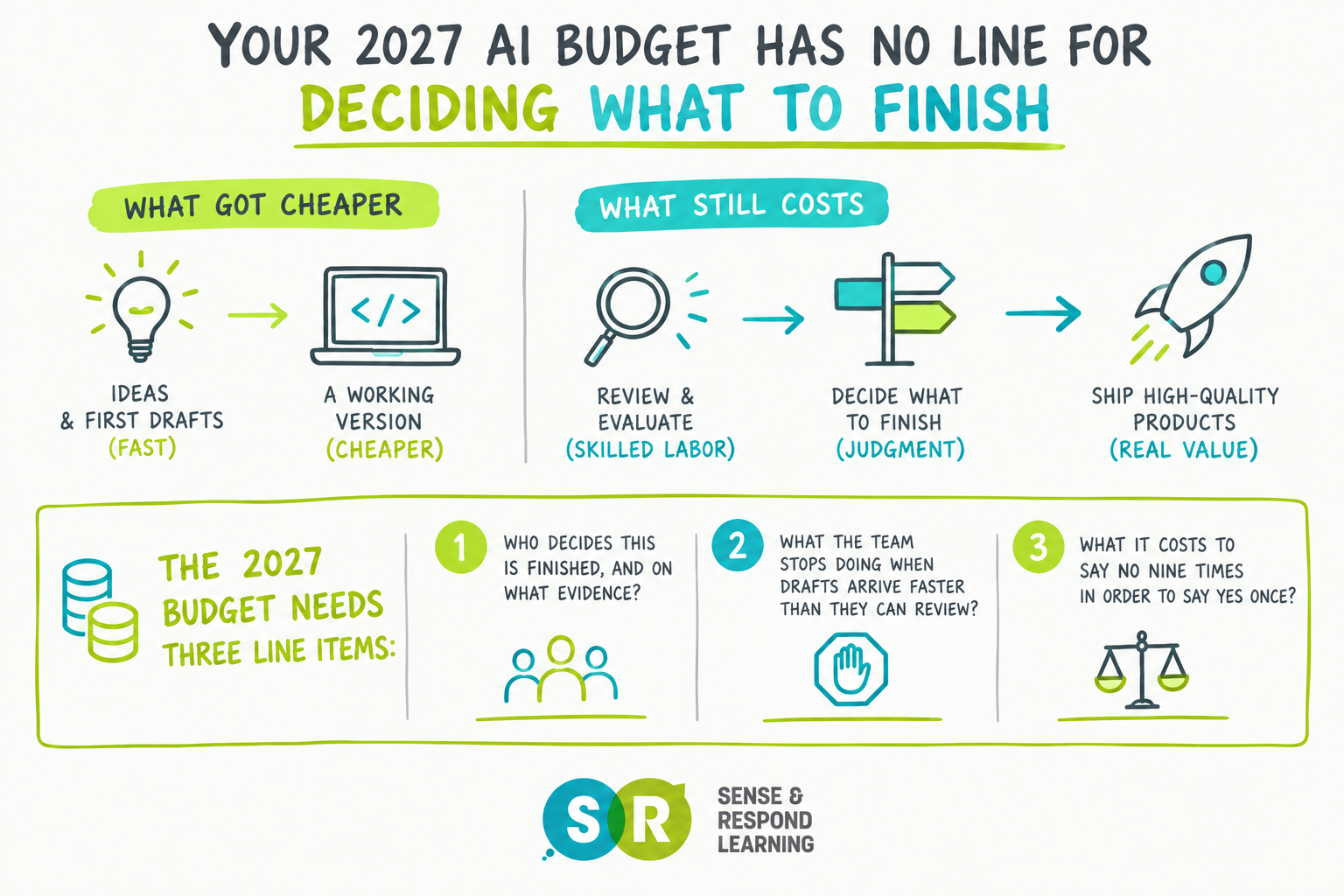
Your 2027 AI budget has no line for deciding what to finish
The common consensus now is that “judgment” and “product sense” are the valued skills in product managers. These activities are work. And they are rarely accounted for in the budget. That’s the last 30% of getting a product across the finish line, especially with you newly AI enabled teams.

What will product management look like in 2027?
Product management is evolving quickly with the integration of AI. What will it look like in the next 6-12 months? Here’s our take on what stays the same, what changes and how PM evolves into the next century of work.
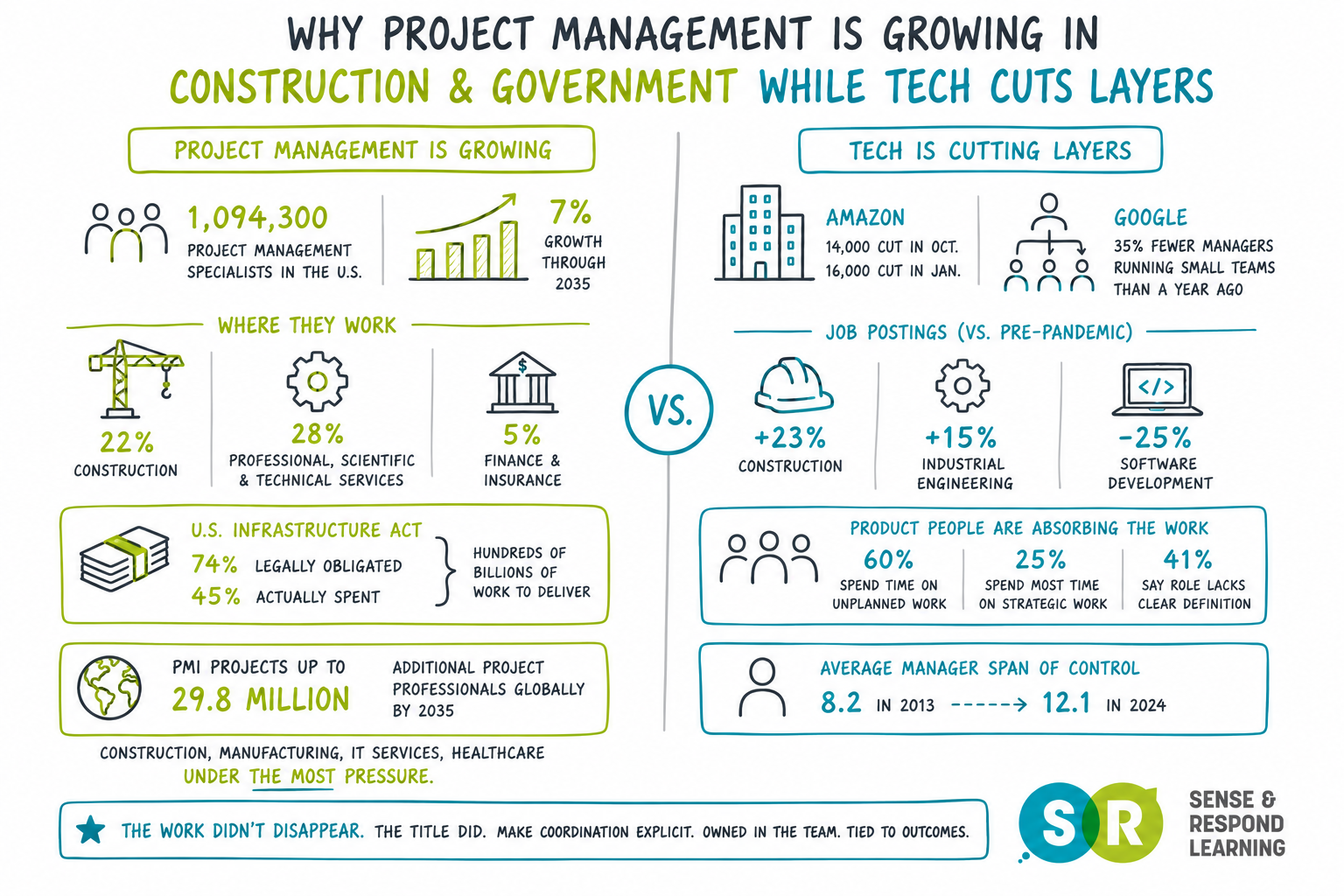
Who does project management work when there are only product managers?
It seems project management is a dying profession, if you work in tech. The reality couldn’t be further from that. Project Management as a profession is growing in industries that have deterministic projects. In tech, where uncertainty is high, product managers do the bulk of the work. What happens to the project management work in tech teams when there are no project managers?
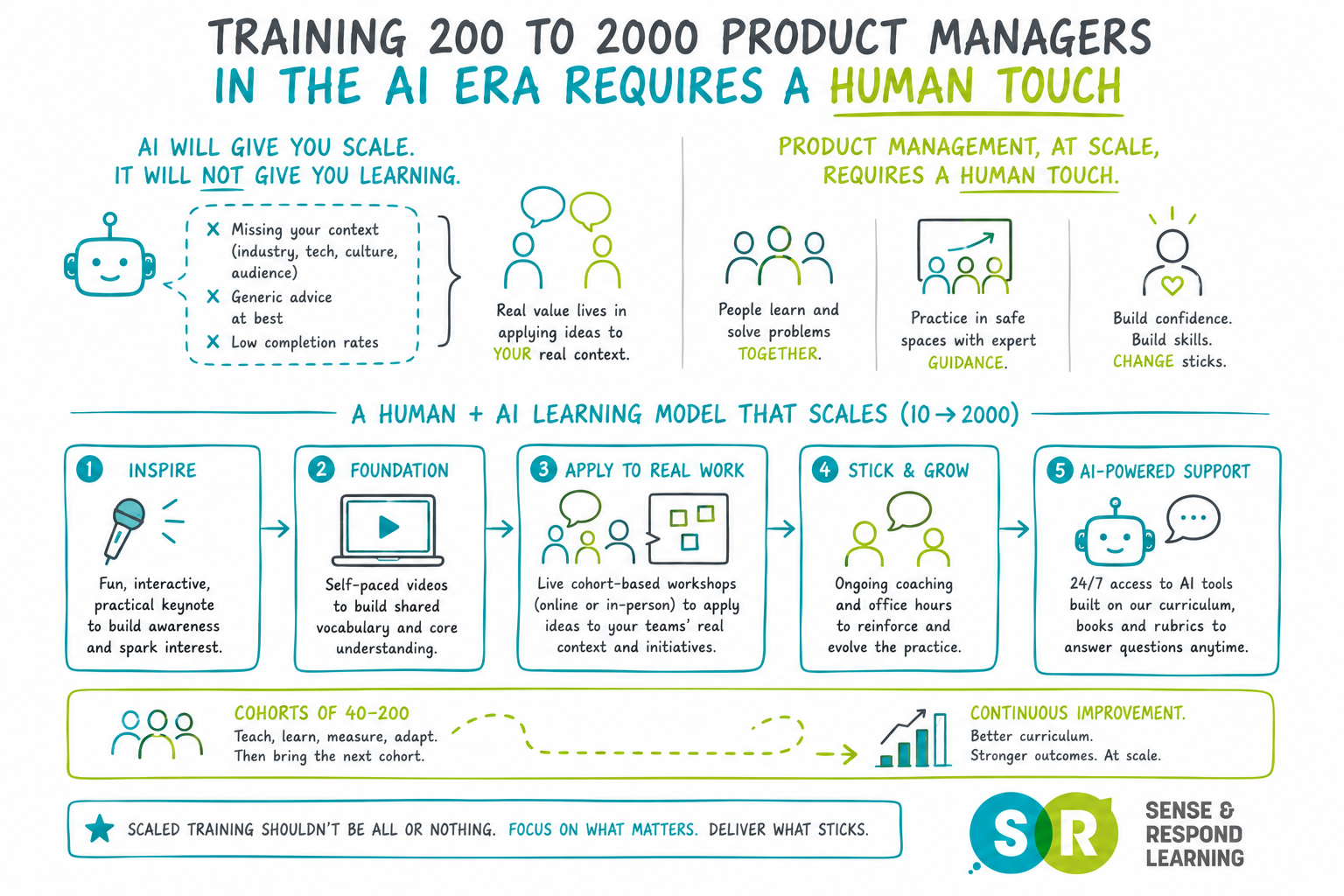
Training 200 to 2000 product managers in the AI era requires a human touch
Product management training at scale cannot be done solely by AI or self-paced video libraries. Your context, your challenges and the human side get lost. Here’s how to train 200 to 2000 product manages in a scalable way that actually delivers results to your bottom line.
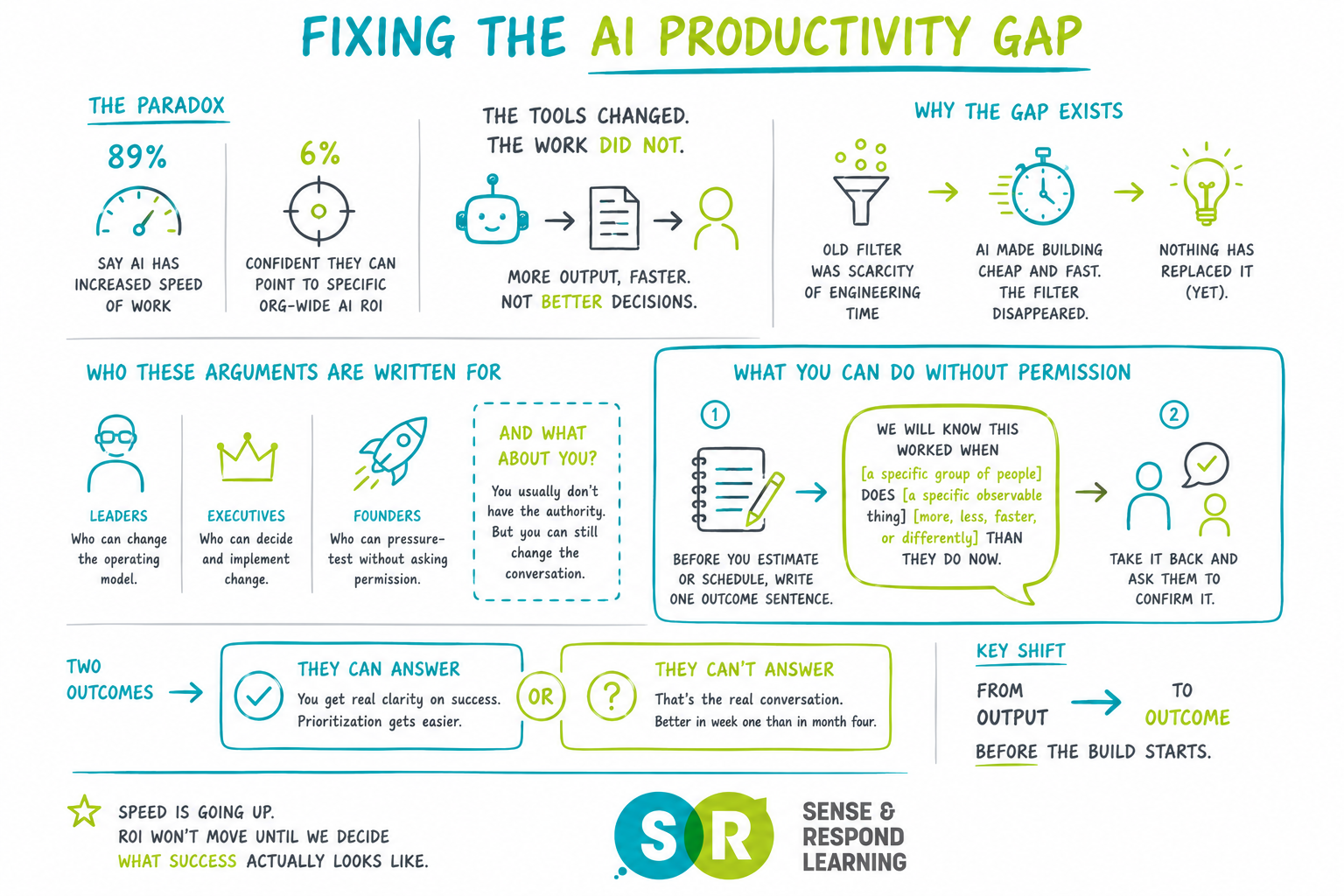
How to Fix the AI Productivity Gap
As evidence piles up that AI productivity does not yield clear ROI, here is one simple tactic product managers can use to make sure what they’re building is meaningful for the company.
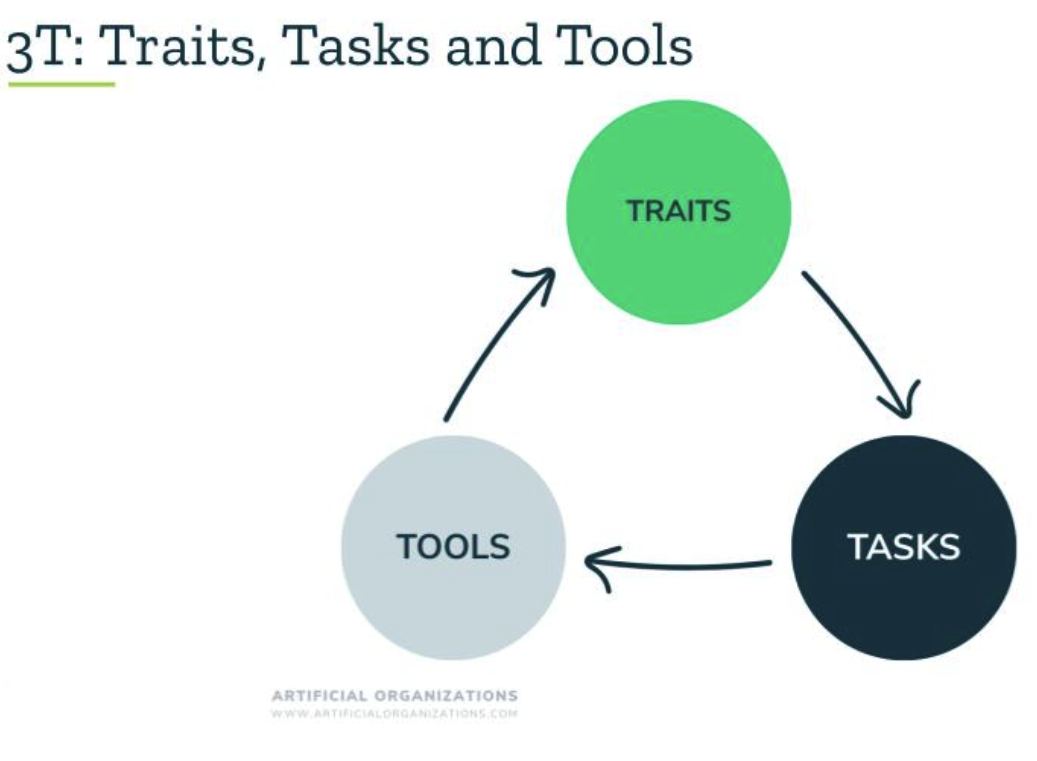
Traits Before Tools: What Barry O'Reilly Taught Us About Adopting AI in the Right Order
Most leaders adopt AI tools-first and automate the wrong things. A recap of our session with Barry O'Reilly on the Traits, Tasks, Tools sequence.
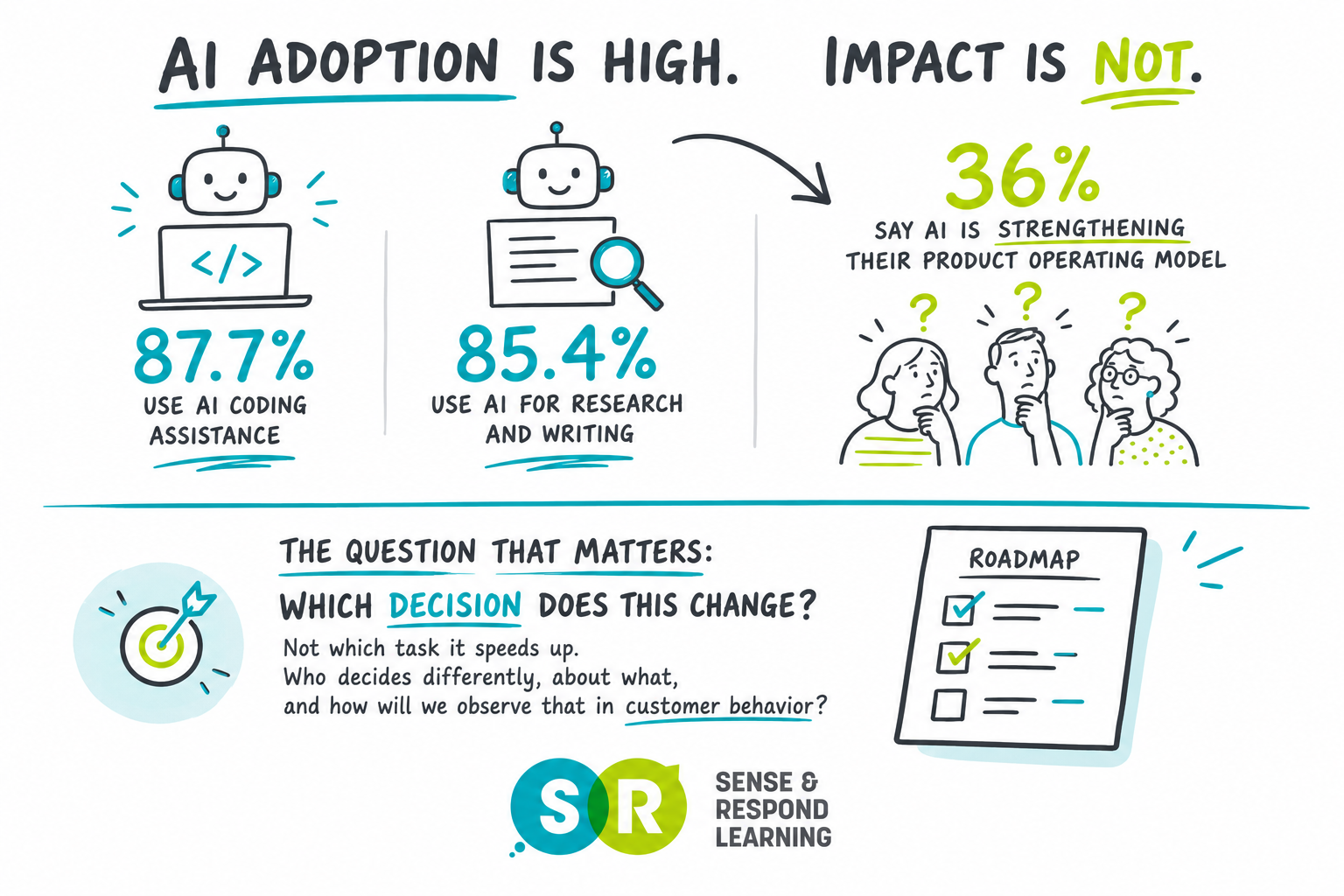
Only a Third of Product Teams Using AI Are Better For It.
87.7% of product teams have adopted AI. Only 36% say it's improving how they build. The gap isn't a tooling problem — it's a judgment problem.
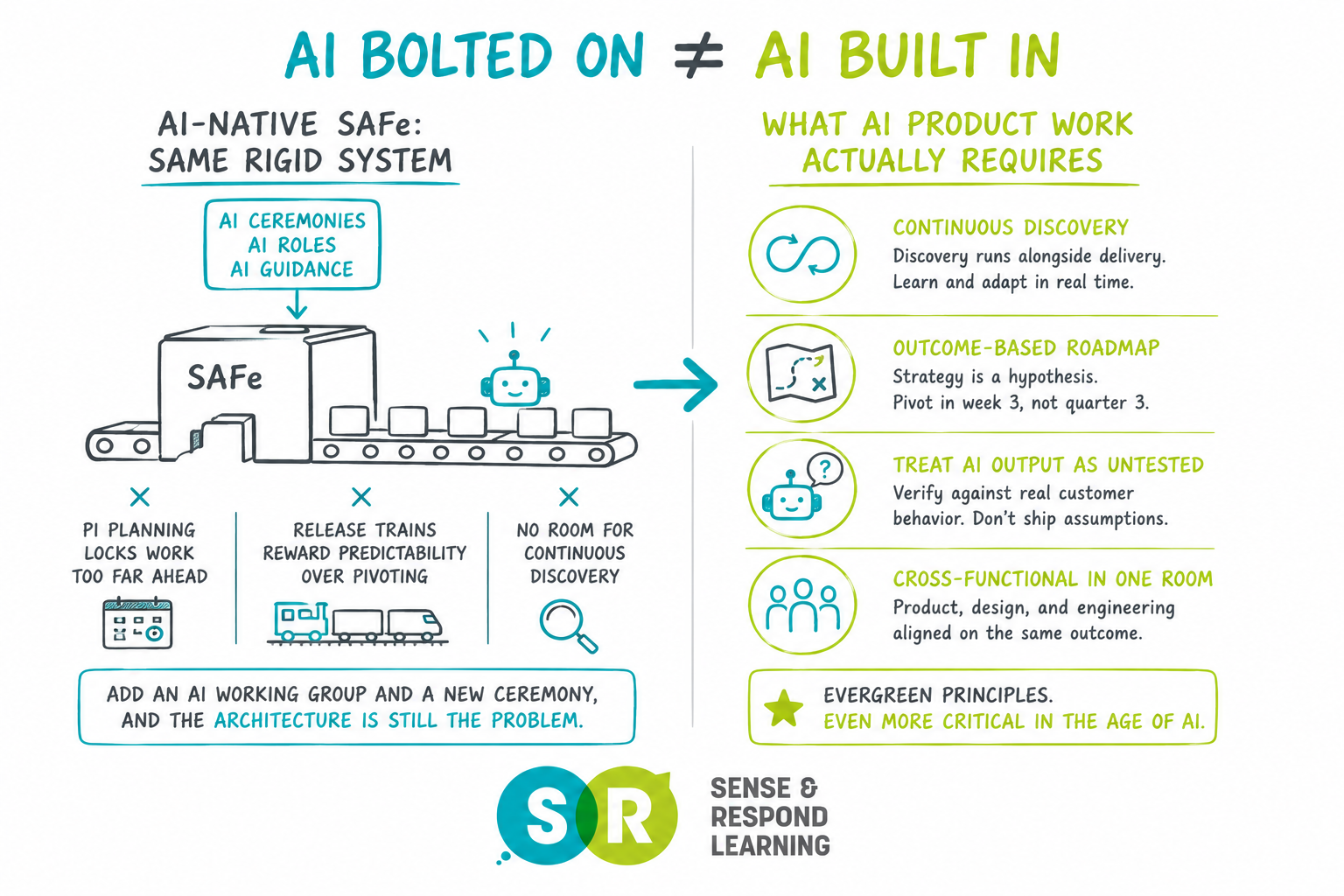
You Can't Bolt AI Onto SAFe. You Have to Redesign the Work.
AI-native SAFe is an oxymoron. You can’t bolt on AI words and expect a rigid process to miraculously change to fit the new technology. Try this instead.
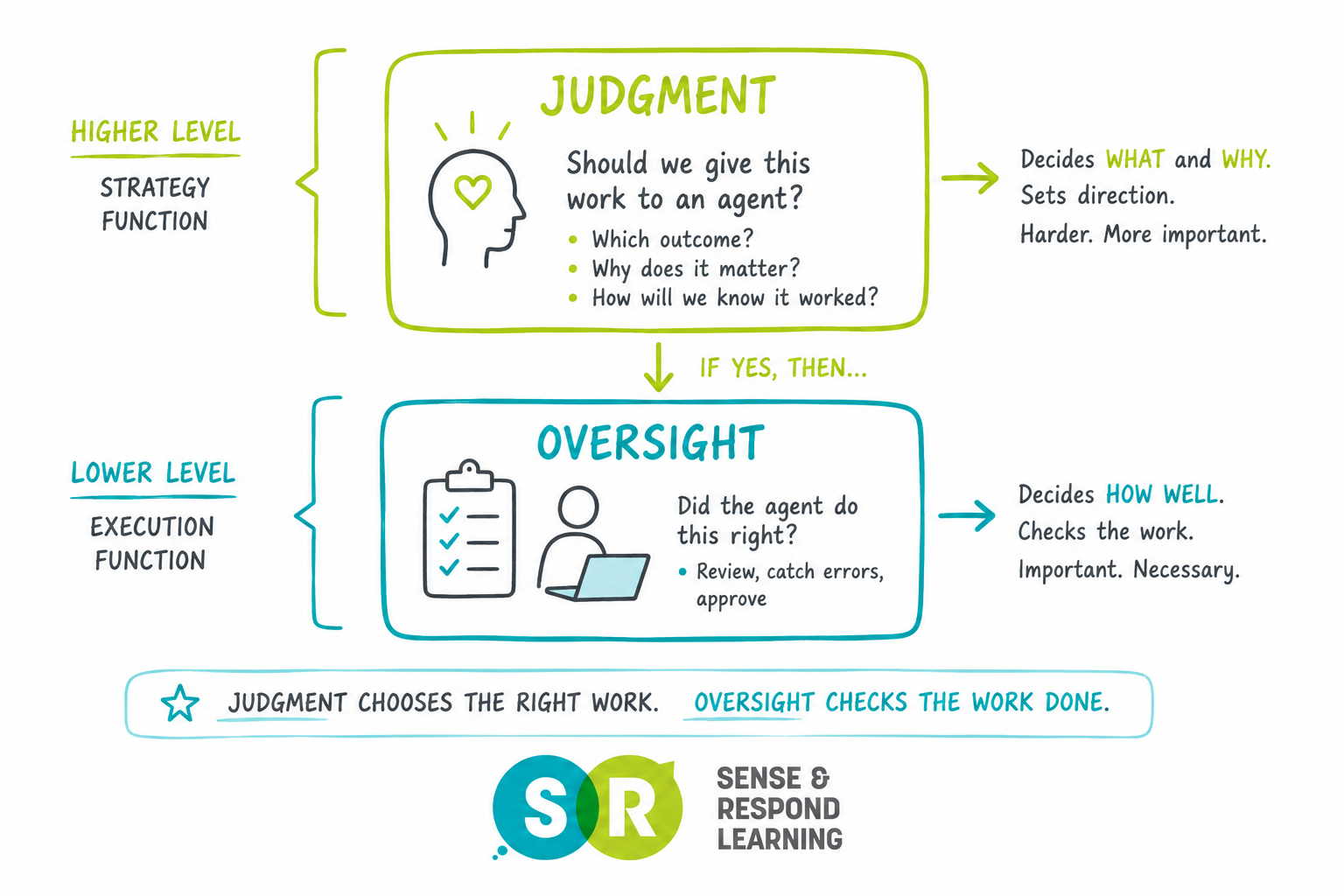
Oversight isn’t judgment
Human oversight catches AI's mistakes. Human judgment decides whether the work was worth automating in the first place. One matters more.
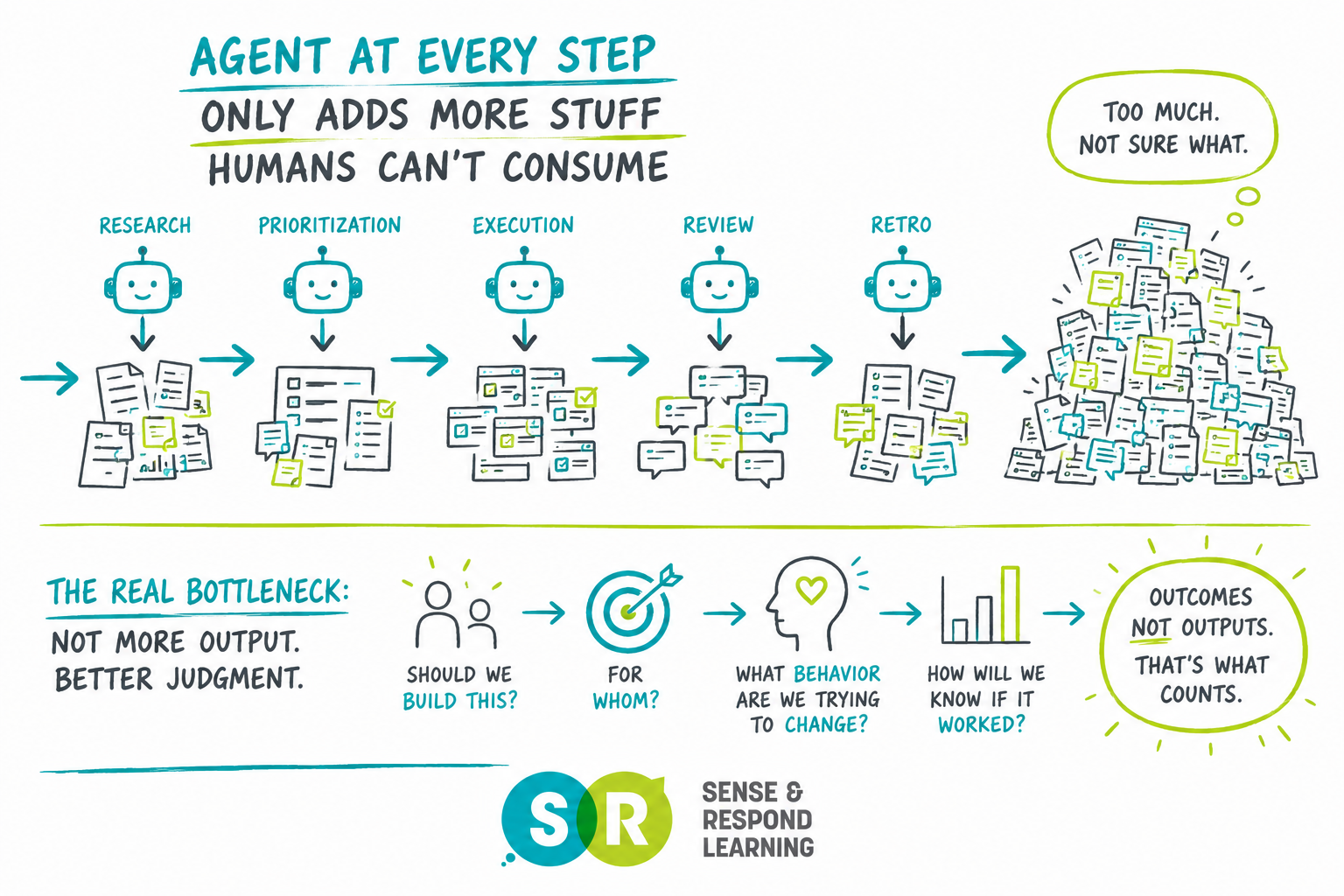
An AI Agent in Every Step Won't Tell You Which Steps Were Worth Taking
An agent that writes a flawless PRD for a feature nobody wanted hasn't helped you. It's helped you waste time more efficiently. Why "AI agents across the lifecycle" solves the wrong problem.
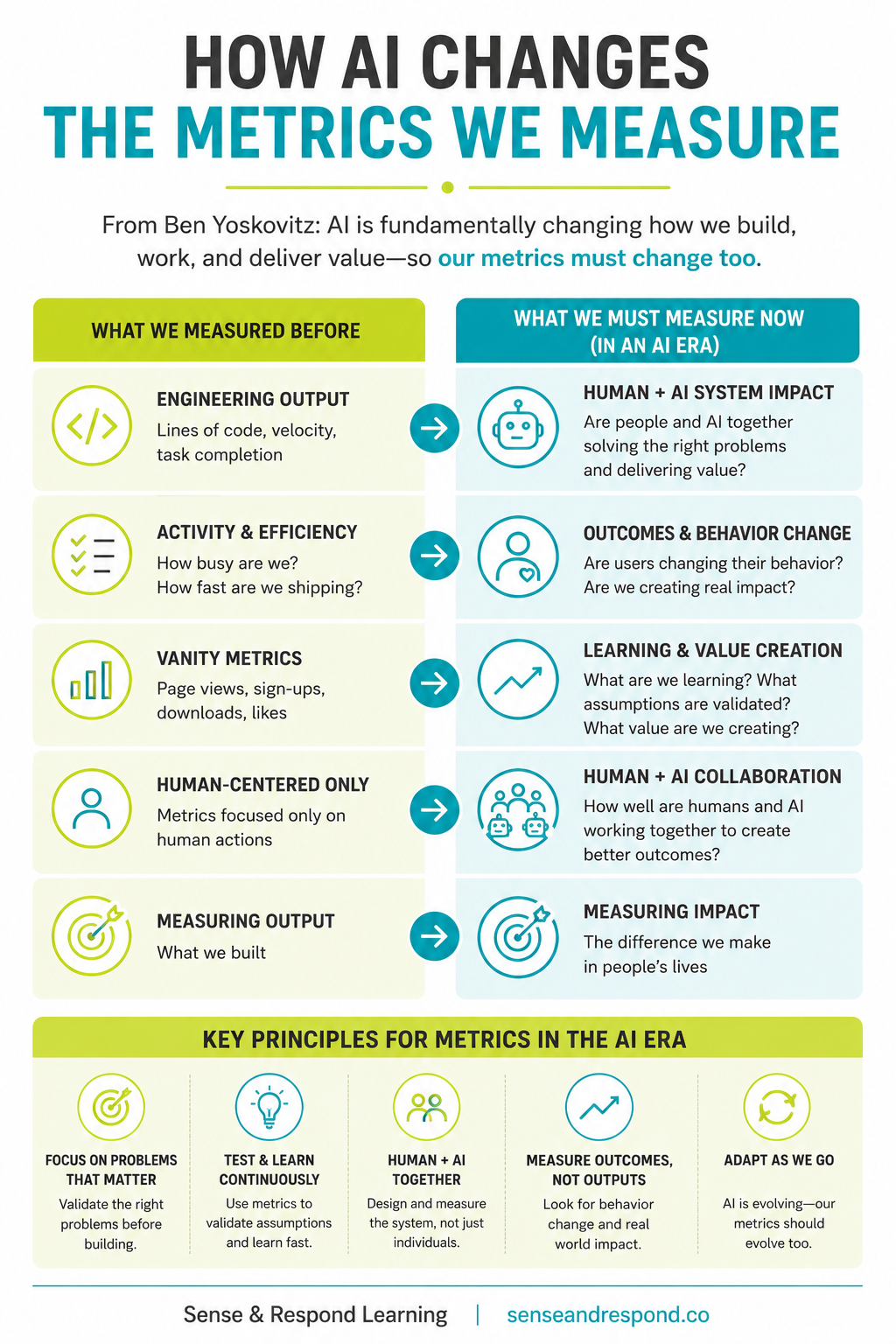
What to measure when AI is running your product
AI quietly broke the metrics we trust. Ben Yoskovitz on what to measure when your product runs on tokens, and why power users now cost you more.
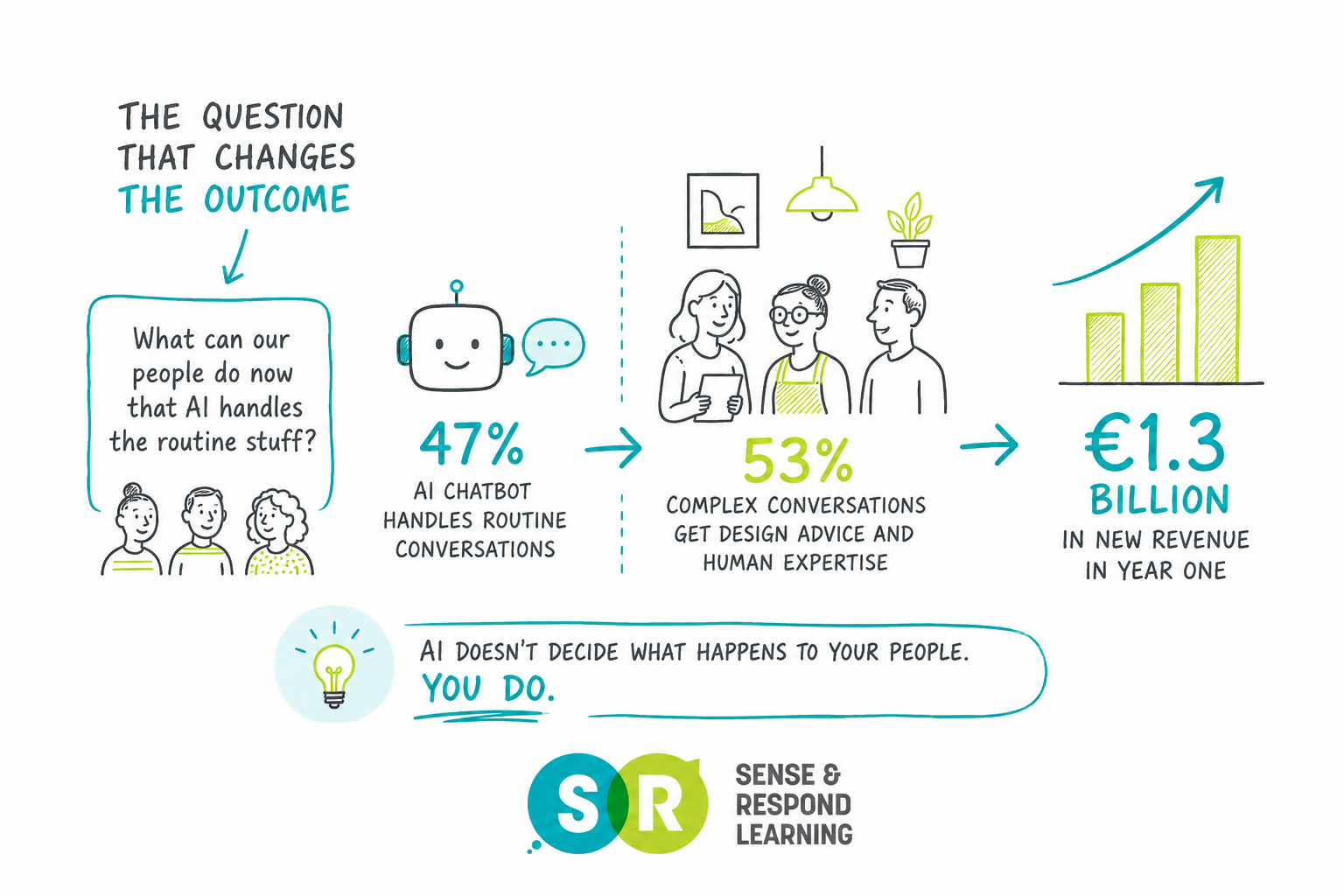
How IKEA Turned an AI Chatbot Into €1.3 Billion in New Revenue
Some companies see AI as a cost-cutting miracle. Others, take a look at the work being automated and use the newly found manpower and bandwidth to generate new revenue streams. Here’s how IKEA came up with an “extra” $1.3BB.
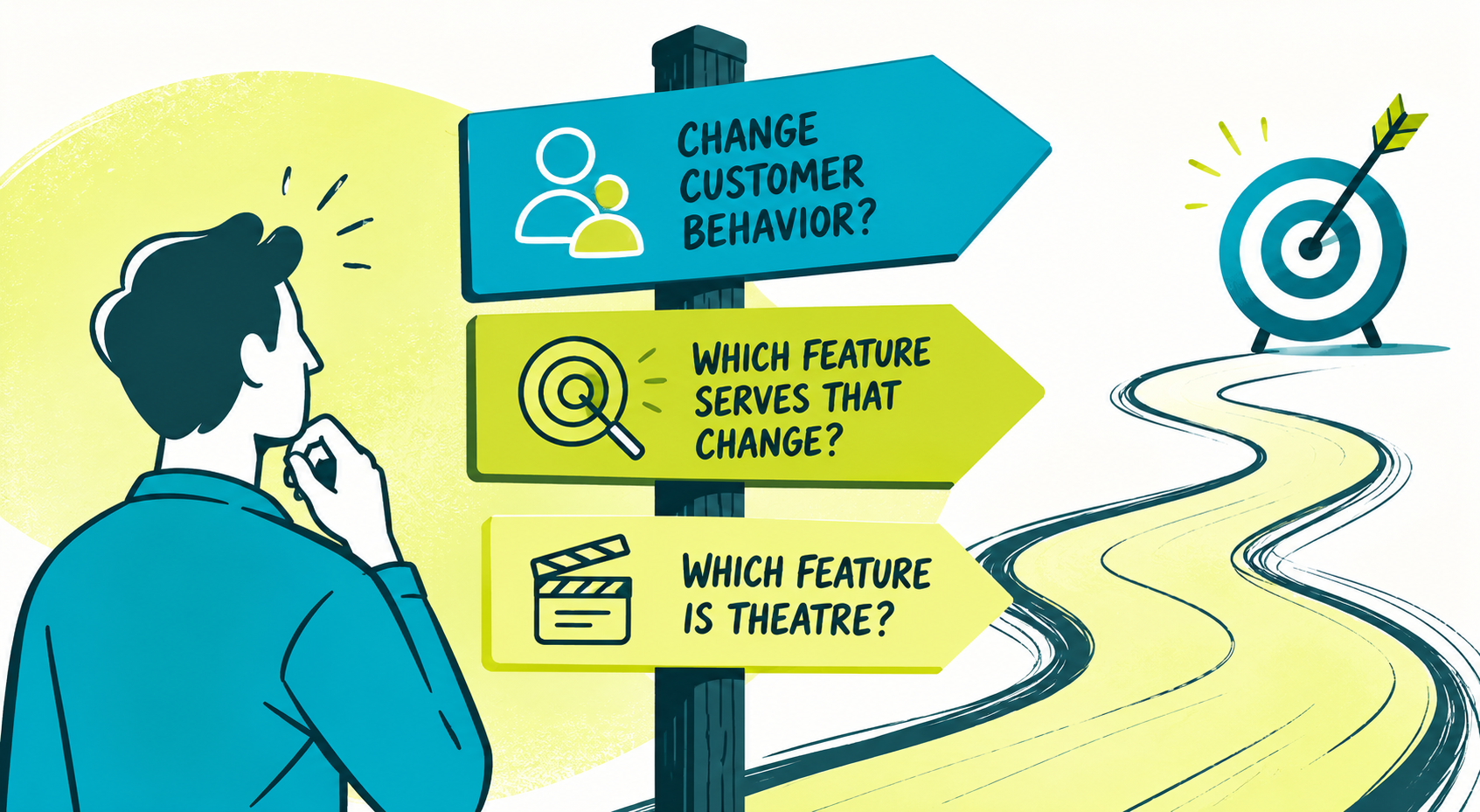
AI Proficiency Isn't the Bottleneck. AI Judgment Is.
Choosing your AI tool is far less important than knowing how to deliver real value with it.
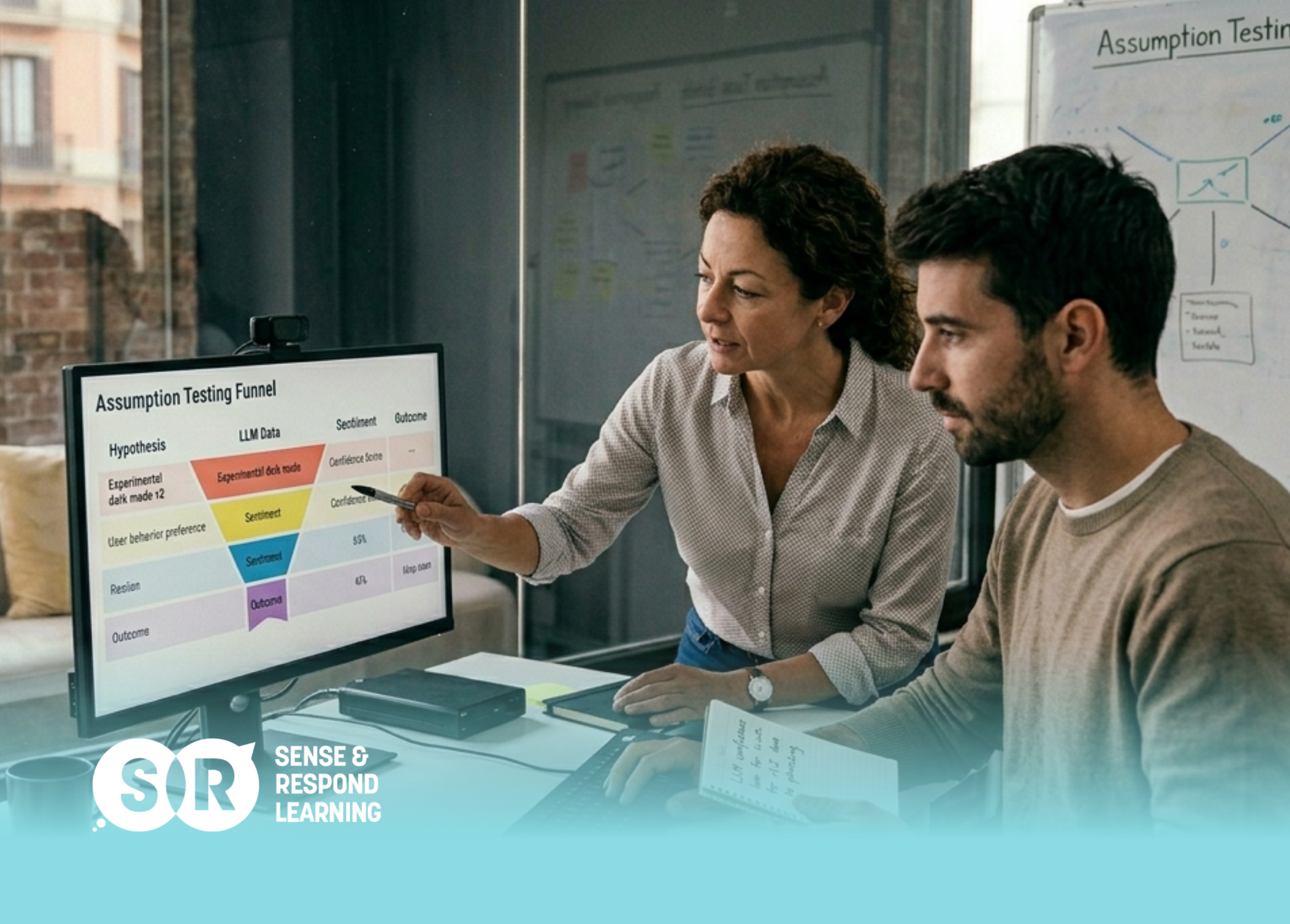
AI as a Discovery Engine: Using Language Models to Accelerate Assumption Testing
Every team member now has access to a tool that can generate dozens of feature ideas in seconds. A product manager prompts ChatGPT with a product description and a user problem and receives twelve well-articulated feature concepts. A designer asks Claude to brainstorm interaction patterns and receives twenty annotated approaches.

The AI Idea Flood: How Agile Teams Stay Outcome-Focused When Everyone Has a Chatbot
Product discovery has always had a time problem. The research activities that produce the most reliable insights — user interviews, prototype testing, behavioral analysis — are time-consuming. A typical discovery sprint that includes recruiting, interviewing, synthesis, and decision-making takes two to three weeks from first question to actionable finding. In a two-week sprint cycle, discovery that takes three weeks is discovery that always arrives a sprint late

The Infinite Machine Problem: When AI Can Ship Everything, How Do You Decide What's Worth Building?
For most of product development's history, the binding constraint was production. Building software was expensive, slow, and required specialized skill. The cost of production forced prioritization: you could not build everything, so you had to decide what was worth building. That constraint was uncomfortable, but it was also useful.

Synthetic Users: How to Run AI-Simulated Customer Interviews (and When Not To)
The promise of AI-simulated customer research is seductive: instead of spending two weeks recruiting, scheduling, and interviewing twelve users, ask an AI to respond as each of them would. Instant feedback. Unlimited iterations. Zero scheduling overhead.

Why Lean UX Is More Valuable in an AI World, Not Less
Every major technology transition produces a version of the same organizational mistake: companies invest heavily in the new capability and assume that the new capability will solve the problems that preceded it. The internet was going to make marketing so efficient that wasteful campaigns would self-select out.