
From Requirements Gathering to Assumption Declaring: A Mindset Shift
Requirements gathering is one of the foundational rituals of software product development. A product manager or business analyst conducts interviews with stakeholders, synthesizes the outputs into a requirements document, and hands that document to the design and engineering team as the specification for what to build. The ritual has a seductive clarity: the requirements define the work, the team executes the work, the product meets the requirements. Done. The problem with this model is not the process — it is the epistemology.
Requirements documents present the outputs of stakeholder conversations as facts about what the product needs to do. In almost every case, those 'requirements' are actually assumptions about what users need, what the business can sustain, and what technology will support — assumptions that have not yet been validated against any form of behavioral evidence.
Assumption declaring is the Lean UX alternative to requirements gathering. Rather than converting stakeholder input into specifications, assumption declaring makes the team's current beliefs explicit, visible, and ranked by risk. The output of assumption declaring is not a requirements document — it is a prioritized list of assumptions that need to be tested before significant investment is made. This shift from certainty to acknowledged uncertainty is not a concession of weakness. It is the intellectually honest starting point for any product decision made under real-world conditions of incomplete information.
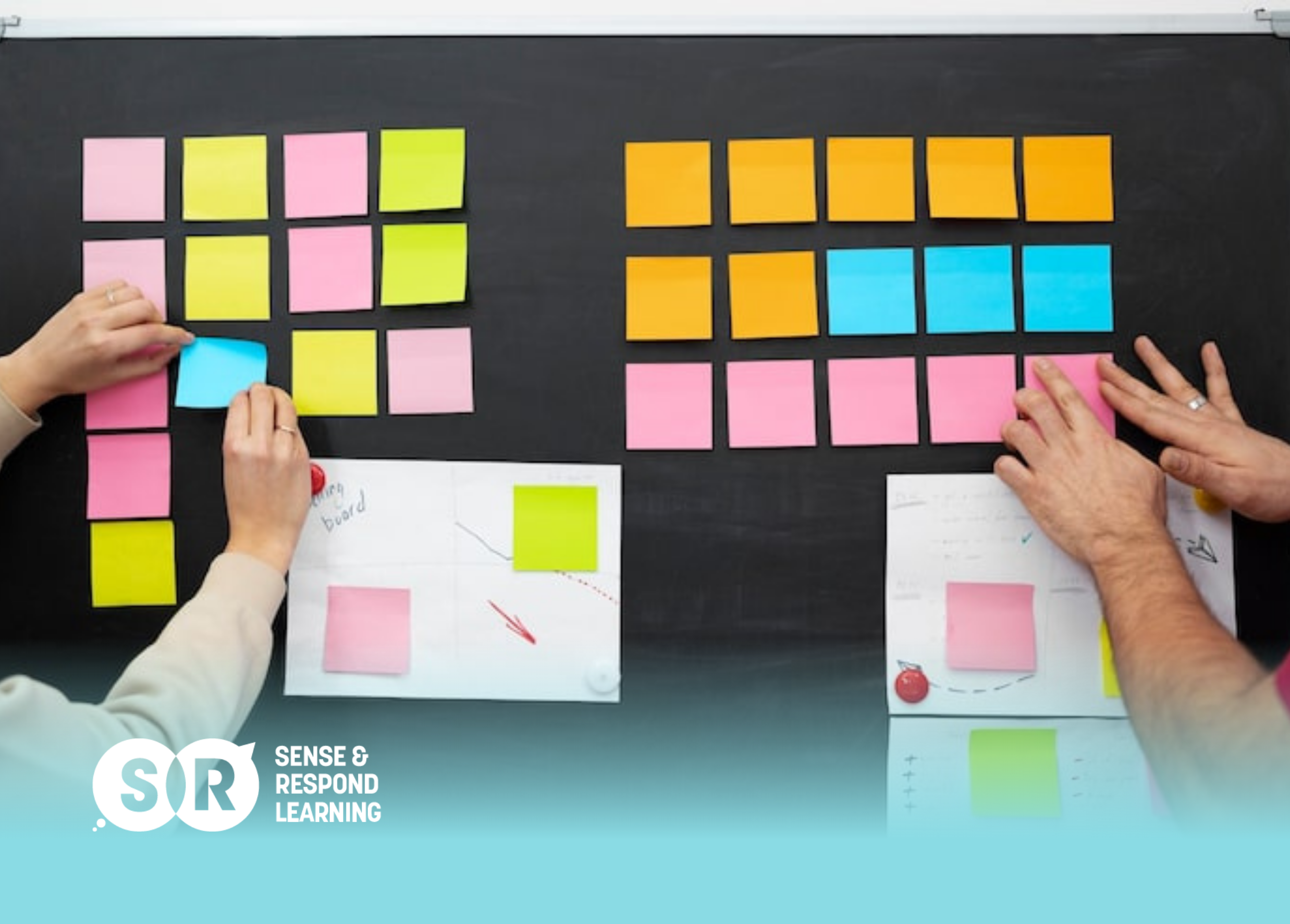
Assumption mapping transforms a flat list of beliefs into a risk-ranked discovery priority queue.
Why Requirements Are Almost Always Assumptions in Disguise
A requirement stated as 'Users need to be able to export their data in CSV format' is doing something subtle: it is presenting a belief about user behavior as a fact derived from observation. In most cases, when you trace the provenance of this 'requirement' back to its source, you find one of a small number of common origins: a stakeholder said users want it (based on anecdotal feedback from a single customer call), a competitor has it (so it is assumed that users will expect it), an internal power user relies on it (and assumes their workflow is universal), or a previous version of the product had it (and removing it feels risky, so the assumption is that keeping it is safe). None of these origins constitutes behavioral evidence. They are all beliefs dressed in the language of requirements.
The practical consequence of treating beliefs as requirements is that the team skips the validation step that would tell them whether the belief is true before building on it. When the export-to-CSV feature ships and 0.3% of users use it, the team learns — expensively — that the requirement was actually an assumption, and that the assumption was largely incorrect. Assumption declaring does not prevent the team from building export-to-CSV. It prevents the team from building it before they know whether the demand is real and significant enough to justify the investment. The process produces the same build decision when the assumption is validated and a different decision when it is not — which is exactly the information the team needs.
The Assumption Mapping Exercise
The assumption mapping exercise, described in Lean UX, is a structured way to surface and prioritize the beliefs embedded in any product initiative. The exercise has three steps. First, the team brainstorms all of the assumptions underlying the initiative — anything that would need to be true for the initiative to succeed. These are written on individual sticky notes without filtering. The brainstorm should be broad: assumptions about user behavior ('users want to export data'), about user ability ('users know what CSV format is and how to open it'), about technical feasibility ('exporting large datasets will be performant at our current architecture'), about business model ('CSV export will not cannibalize our enterprise reporting feature'), and about market dynamics ('competitors' CSV export is a meaningful driver of their acquisition advantage').
Second, the team maps each assumption on a two-by-two grid with axes for 'importance to success' and 'current certainty.' Assumptions that are highly important to the initiative's success and about which the team has low certainty land in the top-left quadrant — these are the highest-priority assumptions to test. Assumptions that are low-importance or high-certainty can be accepted for now. The two-by-two mapping transforms a flat list of beliefs into a risk-ranked priority queue. Third, for each high-priority assumption, the team designs the smallest, fastest experiment that will reduce uncertainty sufficiently to make a confident investment decision. These experiments populate the discovery backlog.

Assumption declaring makes uncertainty explicit, visible, and actionable — not something to hide.
Communicating Assumptions to Stakeholders
One of the practical barriers to assumption declaring is stakeholder expectation: project sponsors, executives, and client partners who have approved a project expect to see requirements documents and design specifications emerging from the early phases of work, not lists of uncertainties. Presenting assumption maps to stakeholders requires a framing shift that some stakeholders will find initially uncomfortable. The key framing is: 'We have identified the assumptions that carry the highest risk for this project, and we are designing targeted experiments to validate them quickly before we invest in full development. This reduces the risk of building something that does not deliver the expected value, at the cost of a short discovery phase that will either confirm our direction or redirect us more productively.
Stakeholders who have been burned by expensive projects that failed because they were built on wrong assumptions are usually receptive to this framing once they understand it. The challenge is stakeholders who have not yet experienced that failure and therefore perceive the discovery phase as delay rather than risk reduction. For these stakeholders, the most effective communication tool is a concrete example from a comparable project — preferably internal — where assumption validation prevented significant wasted investment. The business case for assumption declaring is strongest when it is illustrated rather than argued abstractly.
Building Assumption Declaring Into Your Team's Rhythm
Assumption declaring works best when it is a regular team practice rather than a one-time exercise at the beginning of a project. The team's assumptions evolve as the project progresses: some are validated and can be retired, new ones emerge from engineering discoveries or user research findings, and the risk profile of the remaining assumptions shifts as the project develops. A monthly assumption review — a 30-minute team session to update the assumption map, retire validated items, and add newly identified assumptions — keeps the team's uncertainty model current and ensures that the discovery backlog reflects the team's current actual risk profile rather than the risks that seemed most important three months ago.
The cultural signal that assumption declaring sends is as important as its methodological value. When a team regularly and explicitly acknowledges the assumptions embedded in their work, they create an environment where 'I'm not sure — let's test it' is a normal and respected response to product questions, rather than an admission of ignorance. This psychological safety around uncertainty is one of the most reliable predictors of a team's ability to learn and adapt quickly. Teams that can say 'we were wrong — here is what we learned' without defensiveness are teams that improve rapidly. Assumption declaring is the practice that builds the habit.
The Bottom Line
The shift from requirements gathering to assumption declaring is not a rejection of structure or rigor — it is the application of a more honest, more useful structure to the fundamentally uncertain business of building products for humans. Requirements impose false certainty on a domain where certainty must be earned through evidence. Assumptions acknowledge the uncertainty and create a systematic process for reducing it. Teams that make this mindset shift do not stop making decisions — they make better decisions, more quickly, because they are working with an accurate model of what they know and what they still need to learn.
Related Posts from Sense & Respond Learning
Writing Better User Stories: Why You Need 'Hypothesis Statements' Instead
Proto-Personas: How to Create User Alignments in Under an Hour
Escaping the 'Build Trap': How Designers Can Lead via Outcomes
Integrating User Research into Every Sprint: The '3-12-1' Method
Further Reading & External Resources
Lean UX (3rd Edition) — Jeff Gothelf & Josh Seiden — Chapters 10 and 11 are the definitive guide to assumption mapping and hypothesis declaration
The Lean Startup — Eric Ries — The foundational text on treating business ideas as assumptions to be tested
Testing Business Ideas — David Bland & Alex Osterwalder — A practical field guide to designing and running business experiments
Want to go deeper? This post is part of the Sense & Respond Learning resource library — practical frameworks for product managers, transformation leads and executives who want to lead with outcomes, not outputs.
Explore the full library at https://www.senseandrespond.co/blog
